
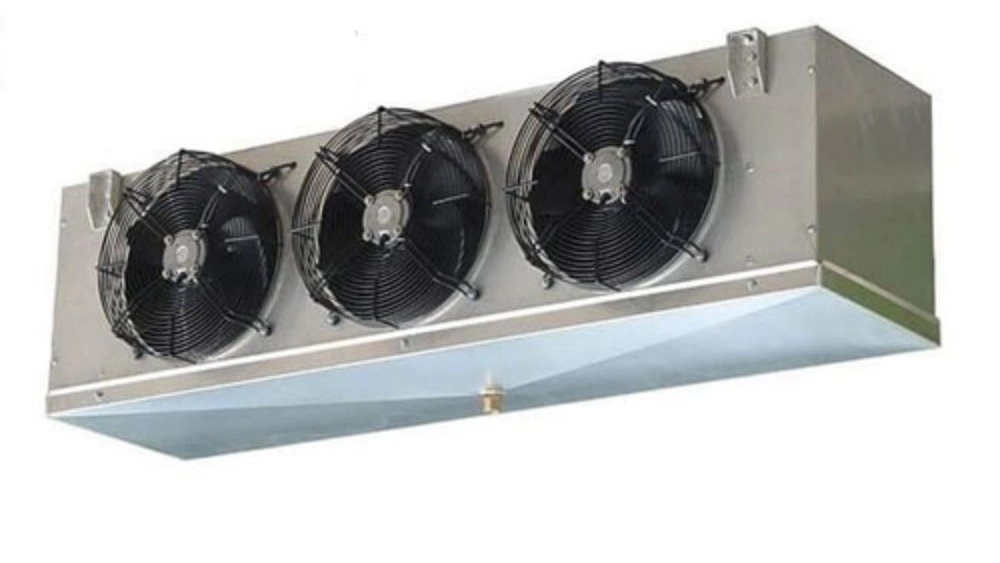
Evaporator in the industrial refrigerator
The evaporator of the industrial refrigerator has an important function in the cooling process. This department is responsible for compressing and circulating Freon refrigerant gas in highway channels. When the compressed gas leaves the compressor, it enters the operator and causes the evaporator to cool due to the properties of the gases. This process causes the hot gas to turn into a liquid in the condenser. The operator helps to cool the refrigerant liquid in the refrigerator by converting gas to liquid and discharging heat.
Types of Industrial Refrigerator Gases:
Chlorofluorocarben (CFCS)
Chlorofluorocarbons in the production of industrial refrigerators were the first generation of cooling gases that were widely used in industrial refrigerators. One of the most famous of these gases is R-12. Although these gases were highly efficient, their negative environmental effects, including the destruction of the ozone layer, led to the banning of their use in many countries.
Hydrochlorofluorocarben (HCFCS)
Following the banning of CFCs, hydrochlorofluorocarbons were introduced as alternatives. R-22 is one of the most famous gases in this category. Although HCFCs have a less destructive effect on the ozone layer, they are still known as powerful greenhouse gases.
Hydrofluorocarben (HFCS)
Hydrofluorocarbons are the next generation of cooling gases in the production of industrial refrigerators, which are widely used in industrial refrigerators. R-134a and R-404A are among these gases. These gases have no effect on the ozone layer, but there are still concerns about their environmental effects due to their high global warming potential (GWP).
Hydrocarbons (HCS)
Natural gases
Carbon dioxide (R-744) and ammonia (R-717) are among the natural gases used in industrial refrigeration systems. These gases have very little environmental impact and are considered as sustainable and long-term options. Ammonia, despite its high productivity, needs careful management due to its toxicity.